
English
Reading
Reading is at the heart of everything we do at St John’s. The teachers and the children know that reading is the key to accessing a full and varied curriculum. Reading whole class quality texts as a basis for English and many other subjects makes sure that children are exposed to the best in children’s literature and a full range of genres.
Phonics and Early Reading
The children’s reading journey at St John’s starts in Reception through the Little Wandle programme for phonics (for more information click here.) The children learn all the letters and sounds in a specific order to help them learn to blend and segment words right from the start. Children’s progress in phonics is closely tracked and children are regularly assessed and regrouped as appropriate. The children in Reception and Key Stage 1 have reading practise sessions with an adult using the Little Wandle scheme books allowing them to use the skills they learn in phonics lessons. They then bring this book home to show off to parents, grandparents, siblings and anyone else who will listen!
Reading in KS2
The children's reading journey continues to develop throughout Key Stage 2, where they have access to a wide range of engaging fiction and non-fiction texts. Teachers support pupils in selecting books that challenge and extend their reading ability while taking into account their individual interests and preferences.
During Key Stage 2, all classes take part in whole-class reading lessons that develop the key skills needed to understand increasingly complex texts. These include inference, retrieval, vocabulary, prediction, summarising and fluency. We also use Literacy Shed Plus to provide high-quality texts and resources that support children's reading fluency, comprehension and enjoyment of reading.
Reading Across the Curriculum
At St John's CE Primary School, we believe that reading is at the heart of learning. As children become fluent readers, they are given regular opportunities to read across the curriculum, helping them to deepen their knowledge, broaden their vocabulary and develop a greater understanding of the world around them.
Across all subjects, including history, geography, science, RE and art, teachers carefully select high-quality fiction, non-fiction and poetry that enrich learning and bring topics to life. These texts are chosen to develop subject-specific vocabulary, encourage curiosity and support children in making meaningful connections between different areas of the curriculum.
Reading for Pleasure
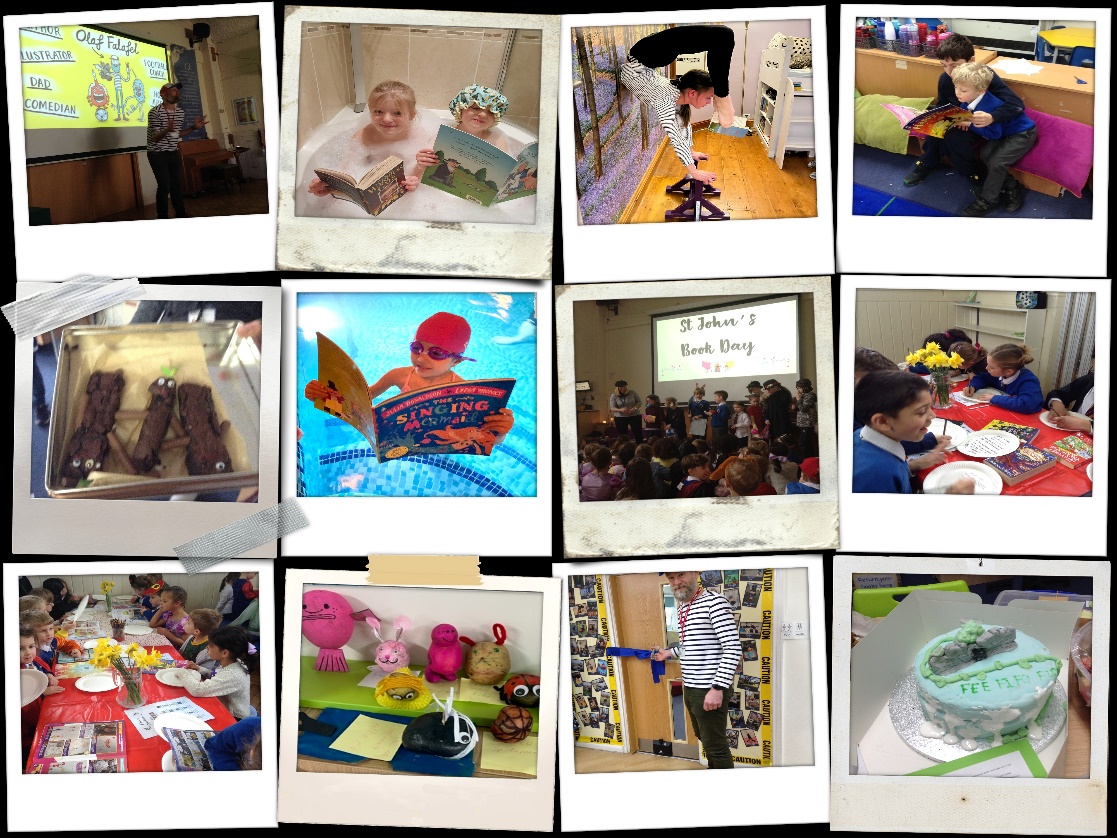
Reading for pleasure is always high on the agenda at St John’s. We have a range of different events and routines that take place throughout the year to keep the children’s love of reading alive. From the fantastic new school library to book buddy reading sessions to visits from authors – there is a real buzz about reading at St John’s!
100 Book Challenge
Below are the book lists for each year group with the book titles for the 100 Book Challenge. The lists contain a variety of texts - some will be classics, some will be new to you, comics, poems, fiction and non-fiction to get stuck into! Keep track of the books you have read and let your teacher know when you reach one of the milestones. Happy reading everyone!

Writing
At St John's CE Primary School, we believe that children write best when they have a clear purpose, an engaged audience and high-quality texts to inspire them. Our English curriculum is carefully planned around a rich range of quality children's literature, allowing pupils to immerse themselves in language, ideas and different styles of writing.
Through engaging texts, children explore a wide variety of genres, including narrative, poetry, non-fiction and plays. They learn the features and conventions of each genre while developing the grammatical knowledge, vocabulary and writing skills needed to become confident, effective writers.
Writing sequences are designed to provide children with opportunities to read, discuss, analyse and respond to high-quality texts before planning, drafting, editing and publishing their own writing. Teachers model the writing process and provide regular opportunities for pupils to write independently, applying the skills they have learnt across a range of purposeful contexts.
We use Spelling Shed to support our pupils in developing confident spelling skills through engaging, interactive learning.
Spelling Shed provides a range of games, activities and challenges that help children practise and apply the spelling patterns and rules they are learning in class.
Writing Across the Curriculum
With these techniques firmly embedded during English lessons, the children become confident writers when applying their skills to other areas of the curriculum. Whether they are writing a diary entry for History, giving a scientific explanation or planning a script for a television news report in Geography, the children are aware of their audience and the need to vary their writing style. The children show their confidence and fluency through the writing they complete independently such as letters to authors, recipes for competitions and some particularly persuasive writing to ask for football to be played every day at lunchtime!